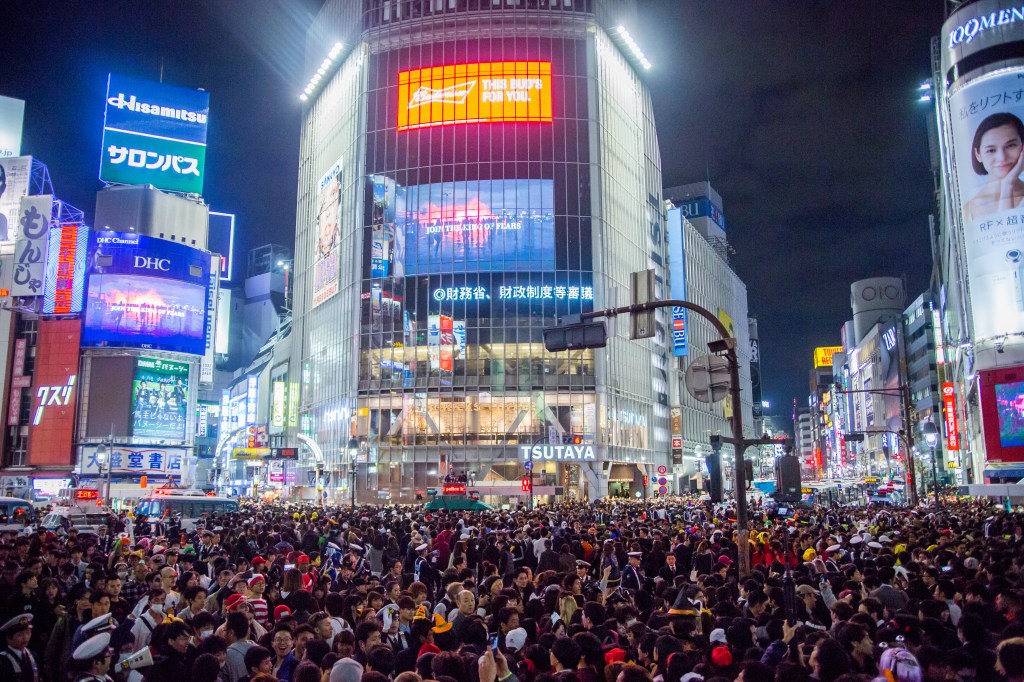
Header Photo Credit
Dick Thomas Johnson from Tokyo, Japan, CC BY 2.0, via Wikimedia Commons
Halloween, originally a Western holiday rooted in ancient Celtic traditions, has spread worldwide, evolving into a unique celebration in different cultures. In Japan, the holiday has undergone a remarkable transformation, drifting far from its traditional origins and becoming a distinct event.
Much like Christmas and Valentine’s Day, Halloween is another Western holiday that Japan has uniquely reimagined. While these celebrations differ significantly from their Western counterparts, they reflect Japan’s ability to integrate and adapt global traditions into something distinctly its own. If you’re interested in reading about Japanese Christmas, here’s an article I wrote last year: Chicken, Lights, Action: Celebrating Japanese Christmas.
Introduced to Japan largely through Western influences, Halloween made its official debut with the Tokyo Disneyland Halloween event in 1997. Interestingly, that’s the year I was born, and back then, Halloween wasn’t exactly part of Japan’s cultural landscape. As a child, I rarely heard about it outside of the US military base—until it slowly started gaining traction. By the early to mid-2010s, during my high school years, Halloween in Japan had reached its peak popularity.
Halloween in the U.S. vs. Japan: A Cultural Comparison
While Halloween is celebrated in both the U.S. and Japan, the cultural context and the way the holiday is observed vary greatly between the two countries.
In the United States, Halloween has long been a community-centered event focused on trick-or-treating, decorations, and house parties. For children, the excitement lies in going door-to-door in costumes and collecting candy from neighbors in residential areas. Streets are often lined with houses adorned with pumpkins, skeletons, and spooky-themed displays. The focus is primarily on family-friendly fun, though adults also take part in celebrations with costume parties and haunted house tours. In the U.S., the holiday retains its spooky origins, with an emphasis on ghosts, witches, and other traditional Halloween imagery.

In contrast, Japan’s Halloween has evolved into a primarily urban, social, and visually-oriented event. The concept of trick-or-treating hasn’t taken root in Japan. Instead, Halloween is synonymous with costume parties, cosplay, and massive street gatherings, especially in large cities like Tokyo and Osaka. People in Japan tend to get creative with their costumes, often drawing inspiration from anime, manga, and video games. A striking difference is that while costumes in the U.S. range from scary to cute or funny, Japanese Halloween costumes often lean toward the horrific, with elaborate makeup and gory effects creating a shocking visual impact.

Another key contrast is the role of commercialization. While both countries experience Halloween as a heavily commercialized holiday, Japan places a bigger emphasis on Halloween-themed events in entertainment districts and retail shops. Special menus, decorations, and products fill the season, targeting young adults and tourists rather than children. In Japan, Halloween feels more like a spectacle—a chance for people to showcase their creativity and be part of a collective cultural performance.
On the other hand, Halloween in the U.S. retains its family-focused roots, with neighborhoods coming together for block parties or community events. While commercialization is evident in the abundance of Halloween-themed merchandise, there’s still a strong sense of tradition and nostalgia tied to childhood experiences like trick-or-treating and pumpkin carving.
Challenges: Overcrowding and Environmental Concerns
Despite its growing popularity, Halloween in Japan comes with its own set of challenges. The biggest issue is overcrowding, particularly in areas like Shibuya and Harajuku. On Halloween night, these districts are packed with people, creating safety risks, disruptions to daily life, and even occasional clashes between revelers and law enforcement.

Cities like Shibuya that has become host to these massive gatherings often face environmental issues, with residents cleaning up litter left by party-goers. Litter from costumes and other refuse, as well as disturbances caused by excessive drinking can be found all over on November 1st. There has been clean up volunteers and efforts, but the root of the problem remains unresolved.
Over the years, the sheer volume of attendees and their environmental impact has become so overwhelming that local governments have been forced to respond. It is to the point that the district of Shibuya has publicly stated they don’t want people coming to Shibuya for Halloween in 2023.
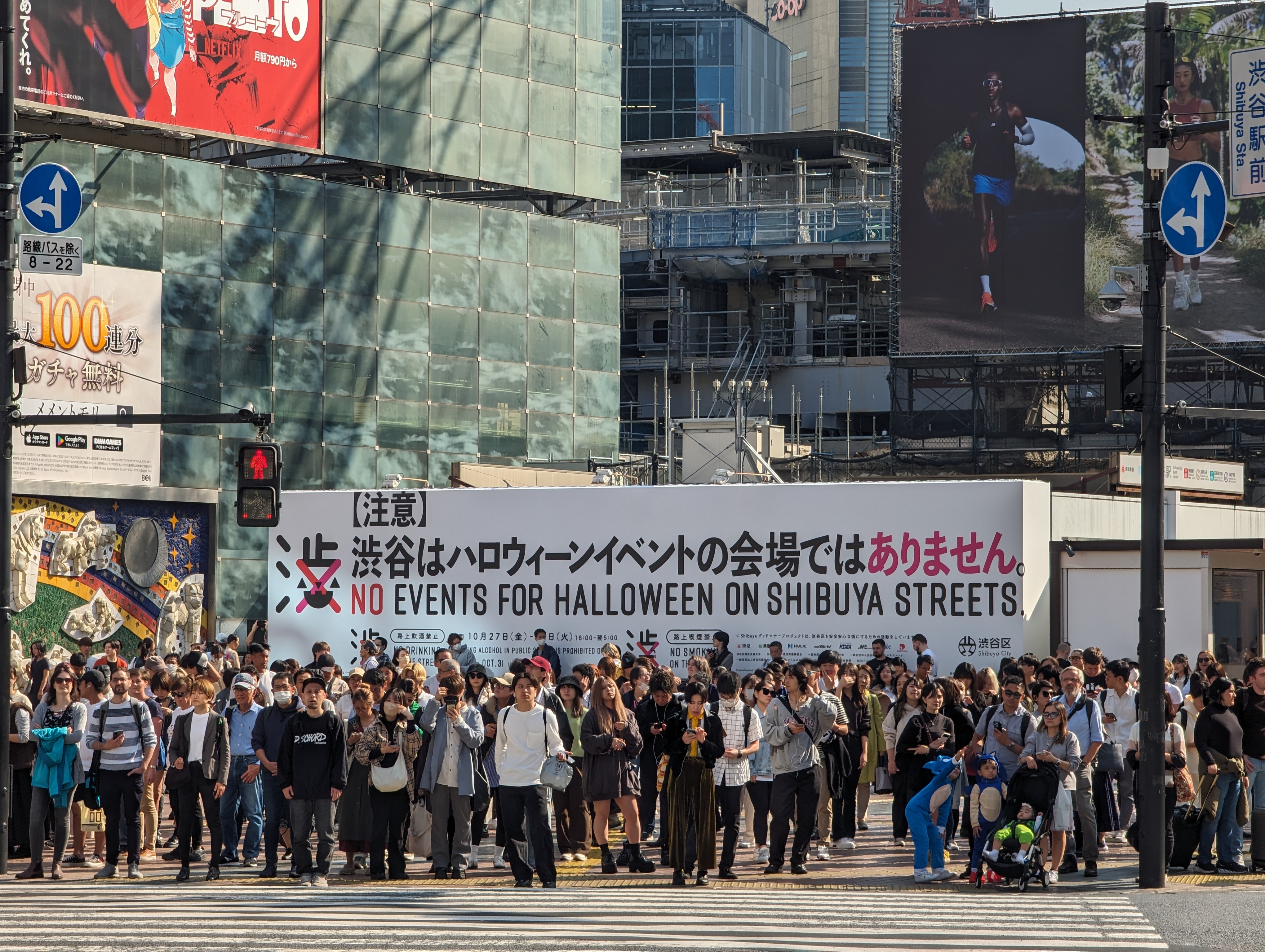
This year, Shibuya took a significant step to manage these concerns by introducing a new ordinance prohibiting street drinking year-round—something that was previously only in effect during Halloween. This measure specifically aims to combat issues arising from large gatherings, particularly during Shibuya’s Halloween celebrations, which have earned a reputation for drawing enormous, unruly crowds.
Personal Reflection
Having seen Halloween transform from a little-known holiday in Japan to one of the biggest events of the year, I can’t help but reflect on how much the celebration has evolved. While I love seeing the creativity that Japanese Halloween brings, the growing concerns about overcrowding make me wonder if future celebrations will shift to more organized, smaller events or if spontaneity will always be a hallmark of Japan’s Halloween culture.
Although I’ve never part-taken in Shibuya Halloween, my own Halloween celebrations are more low-key, it does make my heartache for those who live there and has to deal with the consequences of others who has littered all over their town. Japan is reputed for having care for others and cleaning up after themselves, it’s sad to see that Halloween has gotten so unruly that it’s changing local laws.
Summary
In both the U.S. and Japan, Halloween has become a significant annual event, but the ways it is celebrated are quite different. While the U.S. maintains a family-centered approach with traditions like trick-or-treating and house parties, Japan has embraced Halloween as an urban spectacle, marked by creative costumes and massive gatherings. These differences highlight each country’s unique approach to adopting global traditions, but they also come with challenges, particularly in Japan, where overcrowding and safety concerns have led to stricter regulations. As Halloween in Japan continues to evolve, it will be interesting to see whether these large-scale celebrations can be balanced with public safety and environmental sustainability.
How do you celebrate Halloween in your country, and how do you think Japan’s Halloween will continue to evolve?
 Miles from Home
_(38848549505).jpg)

_(34909692822).jpg)
_(38845907185).jpg)
Leave a comment