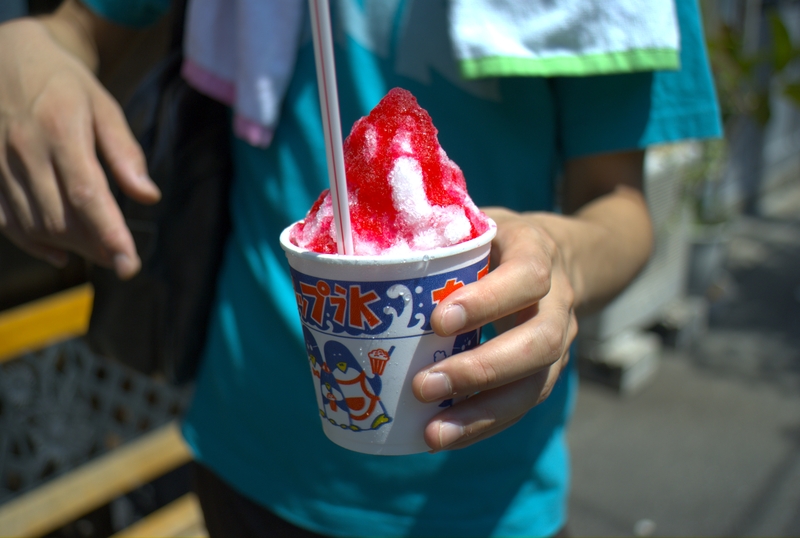
Feature Photo: zenjiro from Kobe, Hyogo, CC BY 2.0, via Wikimedia Commons
When the summer heat hits Japan, there’s one delightful treat that locals and tourists alike eagerly seek out to cool down and satisfy their sweet tooth: kakigori. This traditional Japanese shaved ice dessert, often topped with various syrups and other delectable ingredients, is more than just a refreshing snack; it’s a cultural experience that has evolved over centuries.
Let’s dive into the world of kakigori and explore its history, varieties, and why it’s such a beloved summer staple in Japan. We’ll also take a look at how kakigori compares to the popular Western snow cone.
A Brief History of Kakigori
Kakigori has a long and storied history in Japan, dating back to the Heian period (794-1185). A dish consisting of chiseled ice topped with syrup was referred in the book Makura no Sōshi (The Pillow Book) by Sei Shōnagon. It is described as a luxury item enjoyed by the elite, as ice was a precious commodity. Blocks of ice were stored in ice houses, known as “himuro,” and then shaved and served with natural sweeteners like syrup made from fruit or honey.
Kakigori as modern Japan knows it was invented in 1869, during the Meiji period. The kakigori’s official birthplace is Kanagawa Prefecture in Yokohama in a store on Bashamichi called 町田房蔵 (Machida Fusazou.) This store coincidentally is the same store that birthed ice cream to the Japanese world by the name of Aisukurin, which is something I might write about some other time.
As Japan modernized and the availability of ice became widespread, kakigori transitioned from a treat for the elite to a beloved summer dessert for everyone. Today, kakigori stands are a common sight at summer festivals (matsuri), street fairs, and specialty shops throughout Japan.
The Art of Shaving Ice

If you see an old retro ice shaver like the one above, you’re in for a treat.
The essence of kakigori lies in its finely shaved ice, which should be fluffy and light, resembling freshly fallen snow. Traditional kakigori is made using a hand-cranked machine equipped with a sharp blade that shaves the ice into delicate, airy flakes. Modern shops often use electric machines, but the focus remains on achieving the perfect texture.
Toppings and Flavors: Endless Possibilities
One of the joys of kakigori is the endless variety of flavors and toppings available. However, before WWII, the options for flavor were quite limited. They had Yuki, which was ice with sugar, they had Mizore, which was ice with sugar syrup, and they had Kintoki which was ice with sweetened red bean paste. It was only post-war when the iconic fruit syrup came into prevalence.
Now when we think of kakigori these are the traditional flavors:
- Strawberry (Ichigo): A classic choice, often made with fresh strawberry syrup and condensed milk.
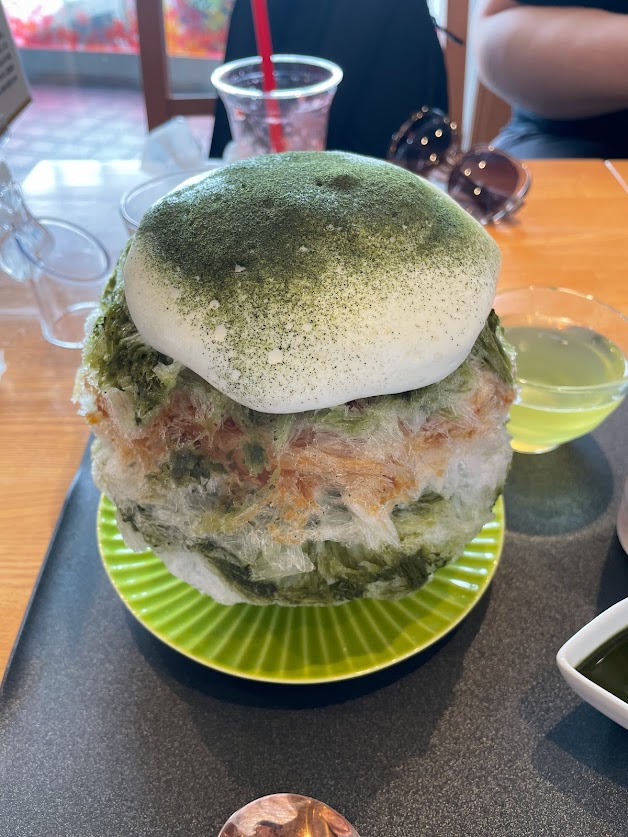
- Matcha (Green Tea): A sophisticated option, typically paired with sweet red beans (azuki) and mochi.
- Melon: Refreshing and sweet, perfect for hot summer days.
- Uji Kintoki: A combination of matcha syrup, sweet red beans, and condensed milk.
- Blue Hawaii: This is my favorite syrup but there’s no standard flavor to it. It could be tropical fruity, could be a blue strawberry, or something that tastes like ramune soda.
In recent years, kakigori has seen a surge in creativity, with shops experimenting with unique and gourmet ingredients. You might find kakigori topped with:
- Fresh fruits like mango, peach, or kiwi.
- Exotic syrups such as lavender, yuzu, or rose.
- Savory elements like cheese or kinako (roasted soybean flour).
- Indulgent extras like ice cream, jelly, or chocolate.
Seasonal and Regional Specialties
Different regions of Japan have their own takes on kakigori, incorporating local flavors and ingredients. For example:
- Kyoto: Known for its Uji Kintoki, Kyoto’s kakigori often highlights high-quality matcha and azuki beans.
- Okinawa: Features tropical flavors like mango and passion fruit, reflecting the island’s lush produce.
- Nikko: Renowned for its natural spring water, Nikko’s kakigori is celebrated for its purity and delicate texture.
Seasonality also plays a role in kakigori offerings, with shops crafting flavors that highlight the best of each season’s produce. In spring, you might find sakura (cherry blossom) kakigori, while autumn could bring flavors like sweet potato or chestnut.
Kakigori vs. Snow Cone: What’s the Difference?
While kakigori and snow cones both consist of shaved ice topped with syrup, there are key differences that set them apart:
- Ice Texture: Kakigori is known for its incredibly fine, fluffy ice that melts in your mouth, whereas snow cones typically have coarser, crunchier ice granules.
- Flavor Integration: In kakigori, the syrups and toppings often soak into the fine ice, creating a harmonious blend of flavors with each bite. In contrast, snow cone syrups tend to sit more on the surface, resulting in a stronger initial flavor that gradually diminishes as you eat.
- Presentation and Ingredients: Kakigori often features elaborate toppings like condensed milk, fresh fruits, and even mochi, elevating it to a gourmet dessert. Snow cones are usually simpler, focusing on brightly colored syrups and sometimes just a cherry or two on top.
- Cultural Context: Kakigori is deeply rooted in Japanese culture and is often enjoyed in traditional settings like summer festivals. Snow cones, originating in the United States, are more commonly associated with fairs, carnivals, and street vendors.
Where to Find the Best Kakigori
While you can find kakigori at summer festivals and street vendors, there are also many specialty shops dedicated to this delightful dessert. Here are some of my reccomendations:
Yelo in Tokyo
Famous for its innovative flavors and late-night hours. Personally, I haven’t been here but I’ve heard great reviews.
Instagram @yelojp

Kirihara in Hayama
Located in Kanagawa prefecture between Yokosuka and Yokohama, this is where you will find me in the summer. They specialize in the soft and fluffy mouth feel of the ice and it’s to die for.
Instagram @kiriharahayama
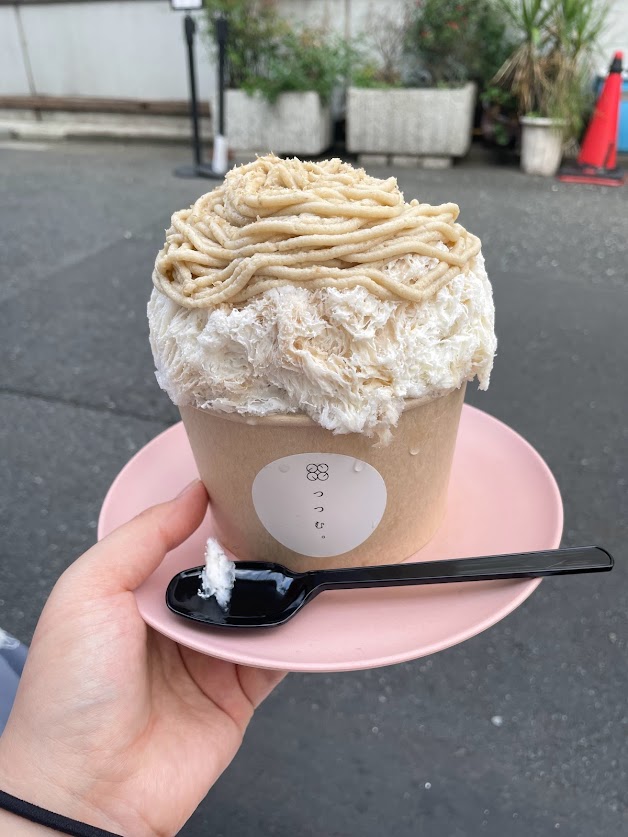
Sakano Ue Cafe in Tokyo
I’ve only eaten at their Asakusa location called Tsutsumu that closed in Dec 2023, but their kakigori flavors are very unique and delicious.
Instagram @sakanouecafe
Komachi Chaya in Kamakura
A nice quiet place to have delicious kakigori. I recommend the ones with the mascarpone foam on top!
Instagram @komachi_chaya.japanesesweets
Making Kakigori at Home
If you’re feeling adventurous, making kakigori at home can be a fun and rewarding experience. All you need is a good-quality ice shaver, ice blocks, and your choice of syrups and toppings. Experiment with different flavors and textures to create your own perfect kakigori.
Conclusion
Kakigori is more than just a dessert; it’s a symbol of summer in Japan, a canvas for culinary creativity, and a refreshing way to beat the heat. Whether you’re enjoying a simple strawberry kakigori at a festival or indulging in a gourmet creation at a specialty shop, this delightful treat is sure to leave you feeling cool and satisfied. So, next time you find yourself in Japan during the summer, be sure to seek out this iconic shaved ice dessert and experience the joy of kakigori for yourself.


Leave a Reply