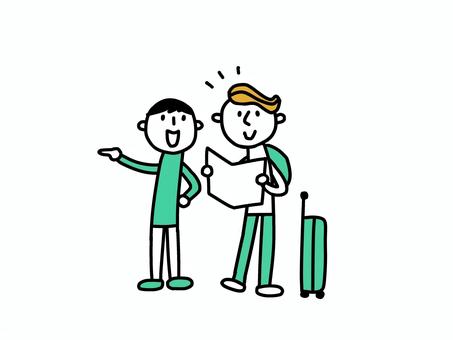
If you’re like me and planning a trip to Japan, knowing a few key phrases can go a long way. While many Japanese people understand basic English, showing effort in speaking their language will always be appreciated. Plus, it can make your interactions smoother and more enjoyable. Here are some must-know phrases to help you navigate Japan with ease!
1. Basic Greetings & Politeness
Japan places a high value on politeness and respectful speech. A simple greeting with a bow can leave a great impression. Impress the locals by using Ohayou gozaimasu, Konnichiwa, and Konbanwa depending on the time of day!
- Hello (used during the day) – Konnichiwa (こんにちは)
- Good morning – Ohayou gozaimasu (おはようございます)
- Good evening – Konbanwa (こんばんは)
- Thanks / Thank you – Arigatou (ありがとう) / Arigatou gozaimasu (ありがとうございます)
- Excuse me / Sorry (also used to get attention) – Sumimasen (すみません)
- Please (used when requesting something politely) – Onegai shimasu (お願いします)
- Can you speak English? – Eigo o hanase-masuka? (英語を話せますか?)
- Please help me! (Use in urgent situations, like emergencies. Sumimasen would work just fine to get people’s attention for help.) – Tasukete kudasai (助けてください!)
Cultural Tip: Bowing is a common way to greet and thank people in Japan. A small nod is enough for casual interactions, but deeper bows show more respect.
2. Essential Travel Phrases
Getting around in Japan is easy, but knowing how to ask for directions can be a lifesaver. You can replace ○○ with any location or item to personalize your question.
- Where is ○○? – ○○ wa doko desu ka? (○○はどこですか?)
- Example: Where is the restroom? → Toire wa doko desu ka? (トイレはどこですか?)
- I want to go to ○○. – ○○ e ikitai desu. (○○へ行きたいです。)
- Example: I want to go to Disney. → Dizunii e ikitai desu. (ディズニーへ行きたいです。)
- I am lost. – Mayoi mashita (迷いました。)
Some phrases you might hear in response:
- It’s over there – Acchi desu. (あっちです。)
- It’s right here – Koko desu. (ここです。)
- Go straight. – Massugu desu. (まっすぐです。)
- Turn left / right. – Hidari / Migi ni magatte kudasai. (左 / 右に曲がってください。)
- You can walk there. – Aruite ikemasu. (歩いて行けます。)
- Take this train/bus. – Kono densha / basu ni notte kudasai. (この電車 / バスに乗ってください。)
Cultural Tip: Many Japanese people are eager to help but may feel shy about their English skills. If someone struggles to explain directions, try using gestures or a translation app.
3. Ordering Food & Shopping
Japanese restaurants and stores are generally very customer-friendly, but knowing a few key phrases can make your experience smoother.
- How much is this? – Ikura desu ka? (いくらですか?)
- I’ll take this, please. – Kore o kudasai. (これをください。)
- Replace kore with anything to request for an item. Example:
- Please give me a menu. → Menyuu o kudasai. (メニューをください。)
- Replace kore with anything to request for an item. Example:
- What do you recommend? – Osusume wa nan desu ka? (おすすめは何ですか?)
- The bill, please. – Okaikei onegai shimasu. (お会計お願いします。)
- Can I use a credit card? – Kaado wa tsukaemasu ka? (カードは使えますか?)
- It’s delicious! – Oishii desu! (おいしいです!)
Some phrases you might hear from staff:
- Here you go. – Douzo (どうぞ。)
- This is our recommendation. → Osusume wa kore desu. (おすすめはこれです。)
- Would you like it heated up? (At a convenience store) → Atatamemasu ka? (温めますか?)
- Would you like a bag? – Fukuro wa irimasu ka? (袋はいりますか?)
Cultural Tip: Tipping is not customary in Japan. If you try to tip, the staff will likely return the money to you. Instead, show appreciation by saying arigatou gozaimasu!
4. Useful Conversational Phrases
- I don’t understand. – Wakarimasen (わかりません)
- Please say that again. – Mou ichido onegai shimasu. (もう一度お願いします。)
- Please speak slowly. – Yukkuri hanashite kudasai. (ゆっくり話してください。)
- Yes / No – Hai (はい) / Iie ( いいえ)
Cultural Tip: Instead of directly saying “no” (iie), Japanese people often use softer rejections like chotto… (ちょっと…), which means “a little…” but implies “no.”
5. Some Words You Should Know
Even if you can’t form full sentences, knowing key words can help in many situations.
Transit
- Airport – Kuukou (空港)
- Train station – Eki (駅)
- Bus stop – Basutei (バス停)
- Taxi stand – Takushī sutando (タクシースタンド)
- Ticket (for transport like trains and buses) – Kippu (切符)
- IC cards – IC kādo (ICカード)
- used for electronic payments, especially for public transportation. They are unified and can be used on most bus and train lines.)
- Suica (スイカ) – Used primarily in the Tokyo area, for trains, buses, and purchases.
- Pasmo (パスモ) – Similar to Suica, but primarily used for transportation in the greater Tokyo area.
- ICOCA (イコカ) – Used in the Kansai area, around Osaka, Kyoto, and Kobe.
- used for electronic payments, especially for public transportation. They are unified and can be used on most bus and train lines.)
Locations
- Bank – Ginkou (銀行) (The ATM is also “ATM” in Japanese.)
- Convenience store – Konbini (コンビニ)
- Hospital – Byouin (病院)
- Hotel – Hoteru (ホテル)
- Pharmacy – Yakkyoku (薬局)
- Police box – Kouban (交番)
- Restaurant – Resutoran (レストラン)
- Supermarket – Suupaa (スーパー)
- Tourist information center – Kankou annaijo (観光案内所)
- Restroom/Toilet – Toire (トイレ)
Cultural Tip: Japan is one of the safest countries, but if you need help, look for a kouban (small police box) in most neighborhoods.
Items
Essentials
- Wallet – Saifu (財布)
- Passport – Pasupōto (パスポート)
- Smartphone – Sumaho (スマホ)
- Charger – Juudenki (充電器)
Health & Hygiene
- Medicine – Kusuri (薬)
- Pain reliever – Itamidome (痛み止め)
- Cold medicine – Kaze gusuri (風邪薬)
- Sanitary products – Seiri youhin (生理用品)
- Band-aid – Bansōkō (絆創膏)
- Eye drops – Megusuri (目薬)
- Mask – Masuku (マスク)
- Hand sanitizer – Shūdoku ekitai (消毒液体) or Handosanitā (ハンドサニター)
- Tissues – Tisshu (ティッシュ)
Toiletries
- Toothbrush – Haburashi (歯ブラシ)
- Toothpaste – Hamigakiko (歯磨き粉)
- Shampoo – Shanpū (シャンプー)
- Conditioner – Kondishonā (コンディショナー)
- Soap – Sekken (石鹸)
- Body wash – Bodiisōpu (ボディソープ)
- Towel – Taoru (タオル)
Final Thoughts
Mastering a few key Japanese phrases can enhance your travel experience and help you connect with locals. While pronunciation might take some practice, Japanese people will appreciate your effort. Don’t be afraid to try—communication is more than just words, and a smile goes a long way!
Got any other useful Japanese phrases you love? Share them in the comments!
 Miles from Home
Leave a comment